
The basics
What is geothermal?
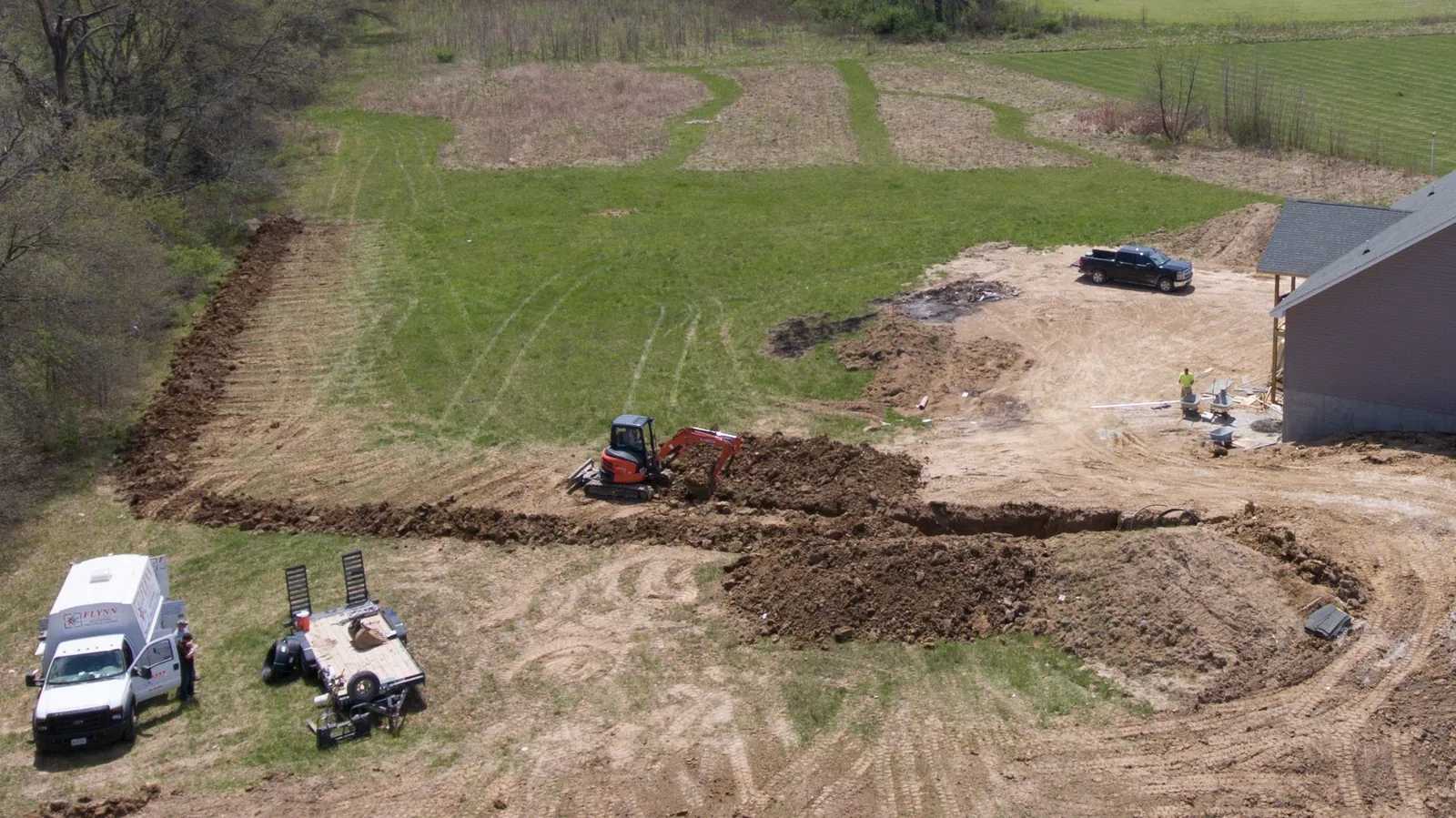
Geothermal is a renewable energy source that uses the earth’s continuously produced heat. A geothermal unit warms and cools your home by pumping circulated water through a looping field — cost effective, sustainable and environmentally friendly comfort throughout the house.
The ground stays at a relatively constant temperature through the seasons, providing a warm heat source in the winter and a cool heat sink in the summer, which keeps your home at consistent comfort year round.
Season by season
How the loop earns its keep
Winter
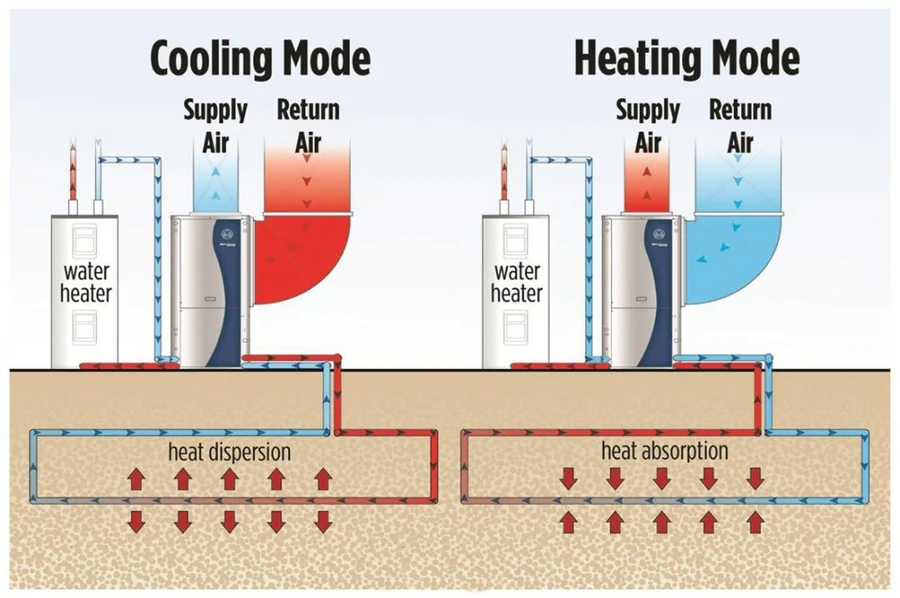
The unit absorbs heat stored in the ground by sending water out through the looping field, then circulating it back to the furnace where it is concentrated and sent as warm, comfortable air throughout the home.
Summer
The unit absorbs heat from your home and transfers it to the looping field, where it is sent out and absorbed by the cooler earth. The cool water returning from the field is then concentrated to create cool air throughout the home.
Loop fields
Which looping field suits your site?
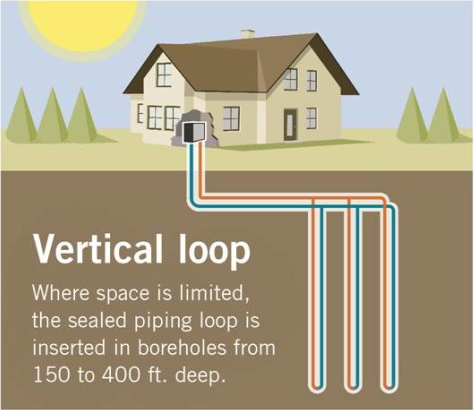
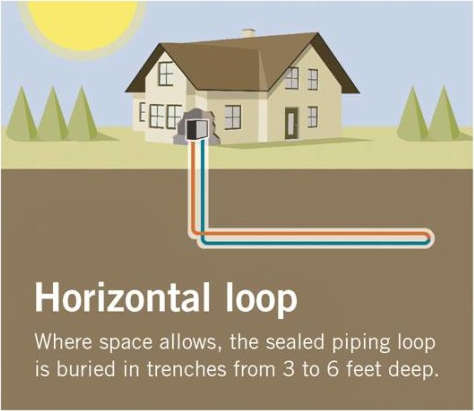
There are four common types. What decides it is your soil, the space available, accessibility, and how much heat exchange you need — measured in tons. The horizontal method takes substantially more space but is far more feasible where vertical drilling is poor. In tight areas such as smaller-lot subdivisions, the vertical method takes up less room and lets us apply more tons of heat exchange.
Vertical looping field
On a standard residential vertical installation, each ton of heat exchange is a 150 ft, 6 inch drilled hole, with 510 ft of ¾″ U-bend HDPE polyurethane pipe installed and grouted to MO DNR standards. Each ton is spaced 10 to 12 ft apart, then piped into a reverse-return 1¼″ header run to the geothermal unit.
Horizontal looping field
Each ton of heat exchange is a 250 ft run of ¾″ HDPE polyurethane pipe, either trenched or bored in at a depth of 5 to 10 ft and spaced 12 to 15 ft apart, piped into a reverse-return 1¼″ header to the unit.
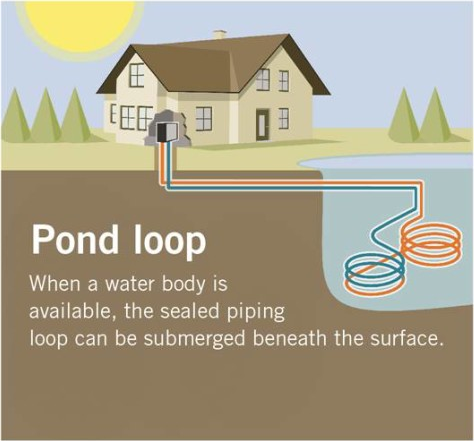
Pond looping field
Less common but the most cost-efficient option, and only possible where the site has an adequate body of water. A supply line runs underground from the building to the water and coils at least eight feet under the surface to keep the lines from freezing. The water source must meet minimum volume, depth and quality criteria, judged case by case.
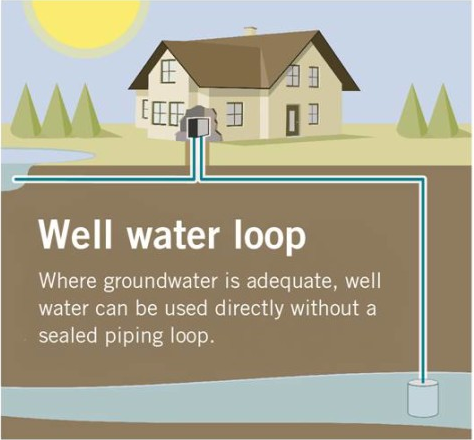
Well water / open loop
An open loop connects directly to a groundwater source such as a pond or a well and pumps that water into the heat pump unit, where it is used for heating and cooling. This has become a less common practice because of improvements in closed loop technology over the years.
Accredited
Certified installers, modern equipment
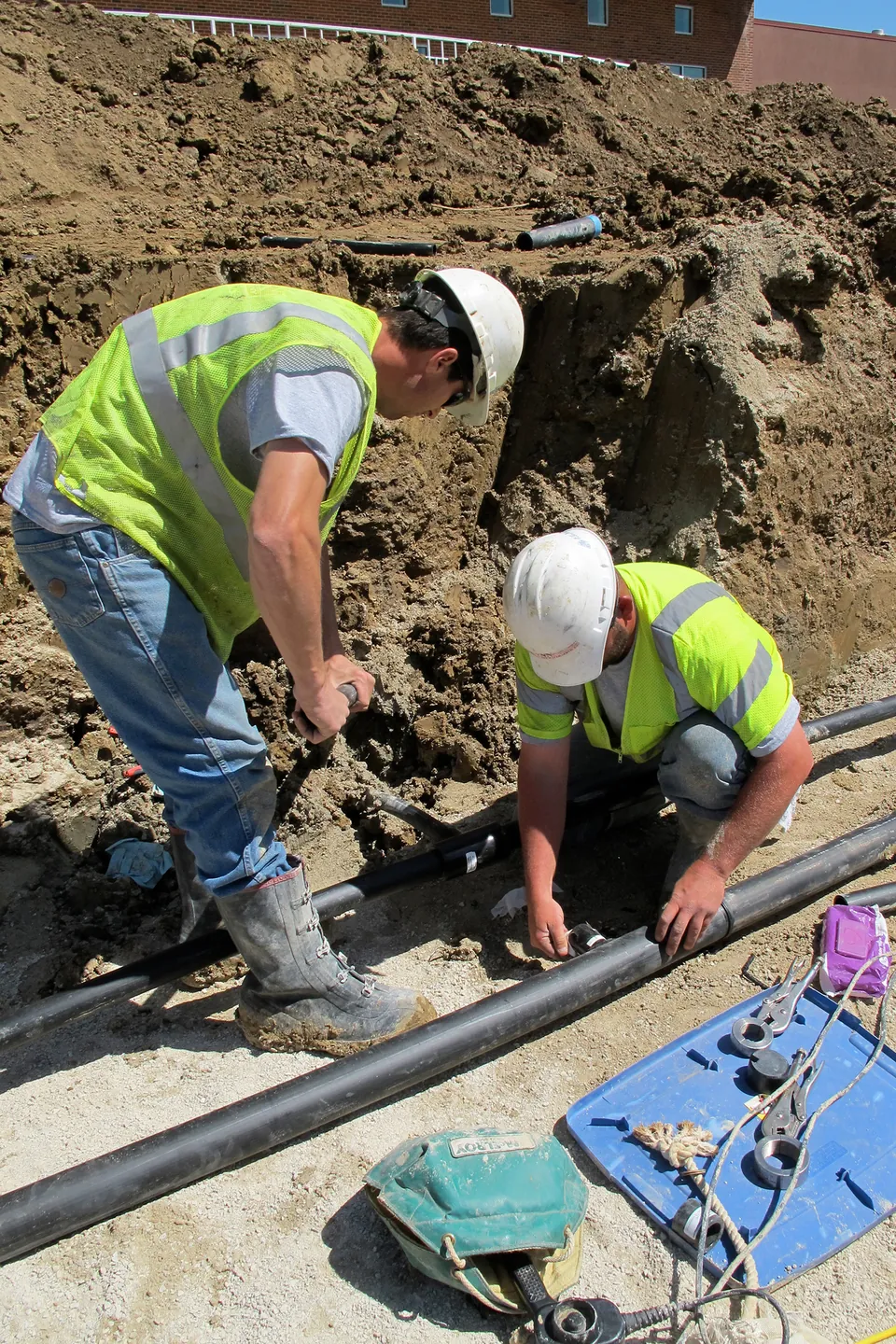
Flynn Drilling is an Accredited Installer of the International Ground Source Heat Pump Association (IGSHPA) and is North American Technician Excellence (NATE) certified. We use modern equipment and highly qualified personnel to achieve superior results on all geothermal projects.
Every loop field we install is grouted to Missouri DNR standard — the same standard we hold our water wells to, and the reason Danny Flynn sits on the state board that writes those rules.
Planning a geothermal system?
Tell us the tonnage, the site and what your HVAC contractor has specified, and we will design and price the loop field around it.